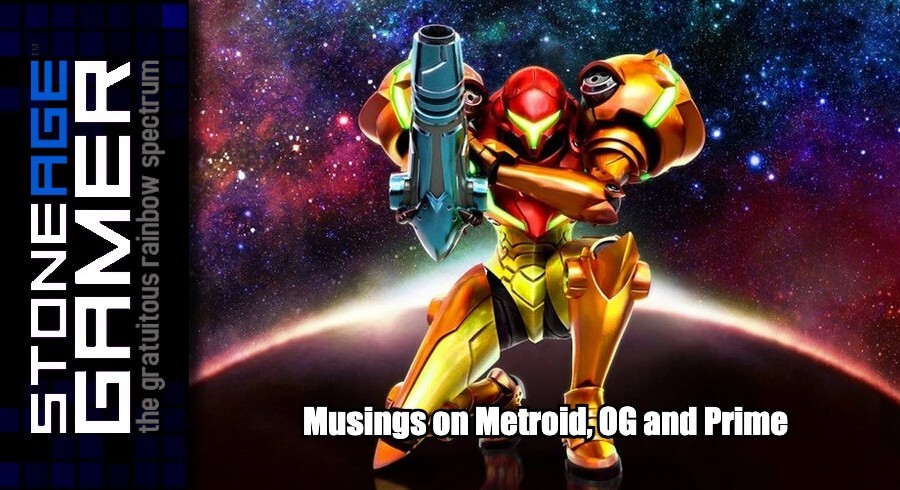
Hello friends. Dan Ryan here, you… there. Thank you so much for checking in and if you like what you see please comment and share. With the impending release of Metroid Prime 4: Beyond, I got to thinking. Thinking about my perception of the Metroid franchise versus its actual place in Nintendo’s eyes. And… I started writing. It’s a bit rambling in places maybe but it needed to come out. And if you happen to be someone who is curious about what makes this franchise so special, why it became part of the portmanteau for an incredibly popular genre of games, I humbly offer my perspective below. After you’ve read my thoughts and find yourself in need of a way to revisit or experience for the first time some of the games in this wonderful franchise, we have some great ways to do that. Submitted for your approval this is Musings on Metroid.
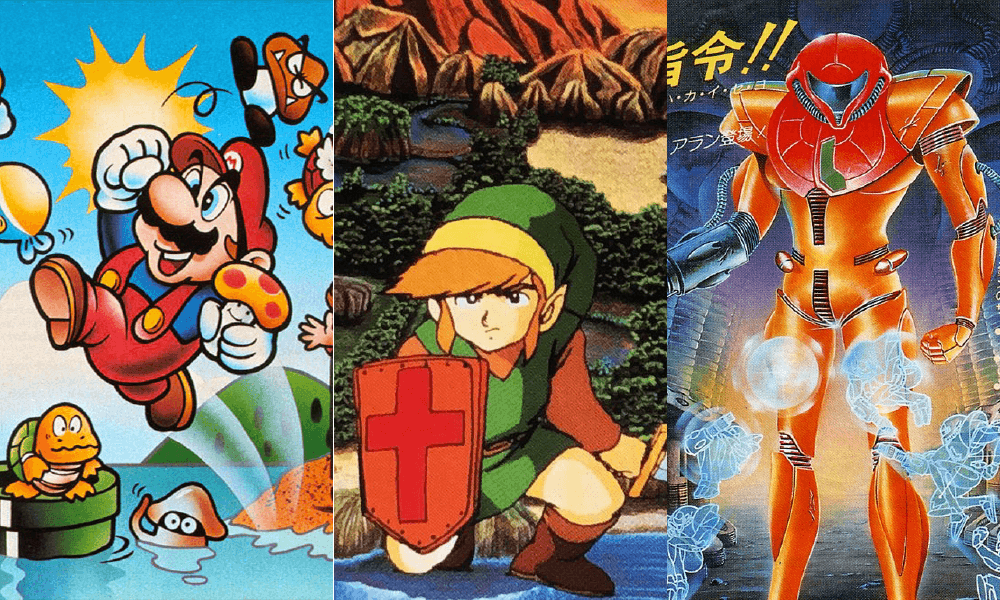 Excluding pack-in carts like the split Super Mario Bros./Duck Hunt that accompanied the Action Set or Super Mario Bros. 3 that shipped with the Challenge Set, the list of all time, best selling NES games worldwide is fascinating. The top selling game by this metric is Tetris with an estimated sell through of 8 million copies worldwide. Rounding out the top 3 are Super Mario Bros. 2 (international version) with 7.46 million copies sold and The Legend of Zelda with 6.51 million copies sold. Which makes sense I think as, at least according to the discussions on my playground or in the cafeteria in the 80’s, Mario and Zelda have been seen as 2 of the big 3 mascot characters for Nintendo so of course their games sold well. That final, venerated, spot in the big 3 always belonged to Samus in my opinion. Now, maybe it’s due to the fact that I was, and am, a huge sci-fi kid with a predilection for darker, scarier stories or that older family members loved the game and I wanted to be cool like them, but Samus has always been in the same echelon as Mario and Zelda to me. And I know I’m not alone. Metroid is a frequent topic of discussion on the podcast and in our Discord community. (which you really should join) We love it, our listeners love it, and I’m sure if you’re reading this, you love it as well. It might surprise you then to find out that the original on NES had a sell through of 2.73 million copies, trailing behind things like Punch-Out!, Excitebike, and Golf among others. In fact the only two games to sell more than the original was Metroid Dread with a sell through of 3.07 million copies and Metroid: Prime with a 2.84 million copy sell through. The unquestionably brilliant Super Metroid, a game regularly featured on best of all time lists, only sold 1.42 million copies, about half of its direct predecessor. A significant portion of these comparatively lackluster sales numbers can be attributed to the series overall lack of popularity in Japan. The most pronounced disparity is in the aforementioned Prime which saw close to 2 million sales in North America and less than 100,000 in Japan. And sure, science fiction is more niche in Japan than North America but it’s not non-existent. Neon Genesis Evangelion, Tetsuo: The Iron Man, Robotech, and a little franchise called Godzilla are some of the more known examples of Japanese science fiction. Nevertheless, none of those wholly match the atmosphere found in Metroid, with Japanese sci-fi tending to grapple with finding the human element in fantastical narratives versus the North American approach of unfettered exploration or cosmic horror of the unknown. Yet, even with all of that, it remains a core franchise for Nintendo. Various official press releases through the years place the franchise in the same tier as Mario and Zelda and the Nintendo Today app includes Metroid as a game which you can receive updates for. Not every Nintendo IP enjoys this distinction. Punch-Out! doesn’t, Excitebike doesn’t, and Golf damn sure doesn’t! Still Metroid is a very un-Nintendo Nintendo game.
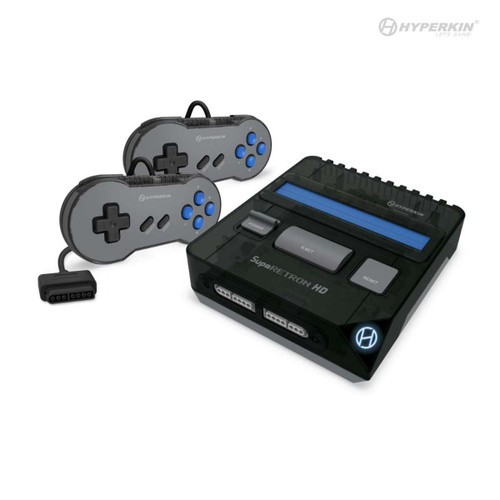
SupaRetroN HD Gaming Console For: Super NES/ Super Famicom
$74.99
SupaRetroN HD Gaming Console For: Super NES/ Super Famicom
Aw snap! The 90s are back with the raddest console to hit your crib. The SupaRetroN… read more
Out of Stock
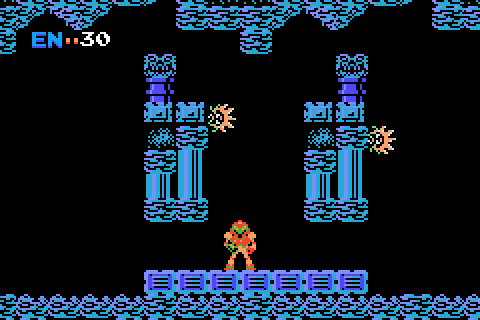 A hallmark of early Nintendo games was their effectiveness in teaching players the fundamentals of video game mechanics. Much digital ink has been spilled over the sheer level of genius that is World 1-1 in the original Super Mario Bros. and rightly so. But, not every game was Super Mario Bros. The Legend of Zelda taught us how to play that style of game. So too did the first Metroid. An underappreciated aspect of the original NES title is how it challenged us to think outside of the traditional, left to right box. From jump you can explore the world in any way you see fit, left/right/up/down. The very first screen invites this thinking as we are dropped into a largely open room with two pillars on either side of us. Following the impulse to move right, as many players initially did, resulted in a dead end three rooms later. This forced a retreat to the starting area and a diversion to the left, where the first power-up—the Morph Ball—was acquired, granting access to the world so cruelly gated from first time players not knowing what they were in for. It was at that moment though that the game forced us to look deeper, to think about where we were going and how we were going to get there. Making your way back to the dead end that began this teaching moment, you couldn’t help but notice in the second room there were enemies below the floor. Enemies you couldn’t reach mind you, but there they were, surrounded by wide open space, begging players to figure out how to get down there. If you were anything like me it was at this point you realized you probably needed a map and since the game did not provide one, it was pencil and (grid) paper time. In just 3 screens the team taught us a new way to think about games and how we interacted with them. It, along with Castlevania, birthed a genre, the Metroidvania. (a name I hate desperately and wish we would all replace with Search Action but I digress) Metroidvania’s rank among the most successful releases year after year with some of the best games of all time, Symphony of the Night/Hollow Knight/etc., owing their DNA to Metroid.
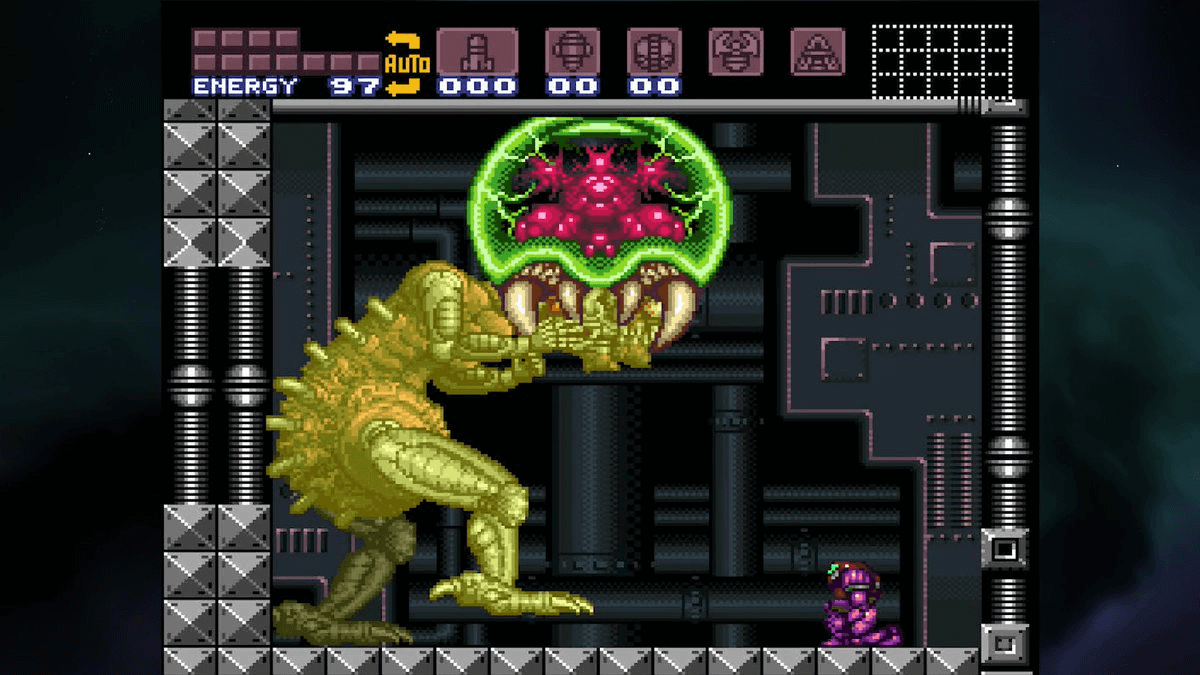 That emergent interaction with the world proved to be a crucial component of the formula. A conscious decision by the development team, the game is devoid of dialogue. There were no cut scenes, no monologues explaining the story to players, (minus the instruction manual I suppose), no in-game movies. The story was told through gameplay, music, and design. It’s incredibly effective and a testament to the creativity of the team. The influence of 1979’s Alien is undeniable on the game from the look to the design to the story. But whereas the film had Ripley to guide us through and explain just what in the hell was going, we had nothing. And it worked. The original NES title gave us everything we needed to know. Later games in the series continued the tradition of less is more as a story telling device though the Prime series is very text heavy. (not that that’s a bad thing) Each game in the series transports players to a world that feels alive, dangerous, mysterious, eerie, haunting, and a thousand other adjectives. While quality varies, few franchises have consistently built worlds so steeped in lore without hours of cut scenes and volumes of text.
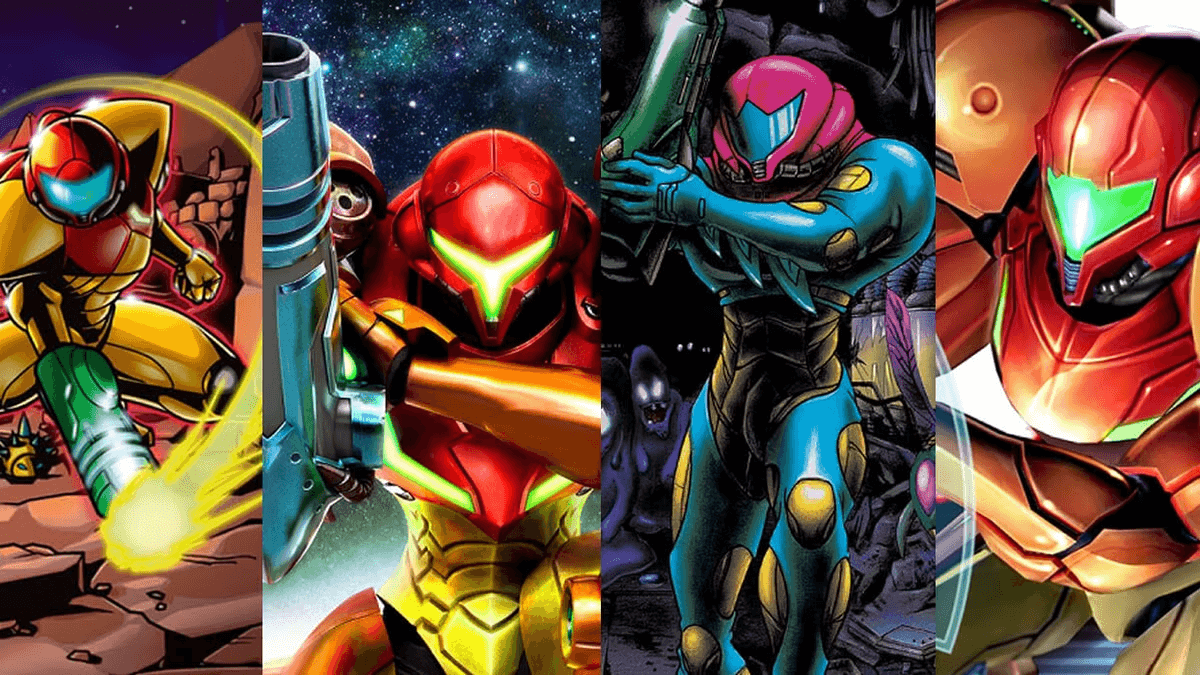 And speaking of Prime, its overall impact on the franchise catalogue cannot be overstated. One of the reasons, I think anyway, that this question of Metroid’s relevance in pop culture comes up is a result of it having skipped the N64/Playstation generation. That generation in particular is singularly vital to the video game landscape as it is today. The games released during that period are not only some of the best ever made but also the most impactful when talking about what games look and feel like today. It’s hard to imagine what gaming looks like now without the influence of Majora’s Mask or Metal Gear Solid. And Metroid was simply not part of that conversation. We got the original in 1986, Metroid II for the Game Boy in 1991 (play the remake instead, or AM2R, please play AM2R), and Super Metroid in 1994. 3 games in 8 years isn’t all that bad but when you consider it took a further 8 years to get the next release, the admittedly awesome experience of getting Prime for the GameCube and Fusions for the Game Boy Advance on the same day, it’s easy to see how Metroid took the proverbial backseat. But Prime did a lot of heavy lifting in so far as restoring Metroid to the forefront of Nintendo. (as much as it will ever be anyway) Prime was an incredibly smart update of the Metroid formula that somehow managed the impossible, making Metroid work in 3D. While not the first to attempt it I would argue that Metroid Prime is one of the best early examples of the 1st-person perspective being better for something other than shooting. Similar to the influence the original series had on the Metroidvania genre, I would argue games like Bioshock or the more recent Indiana Jones and the Great Circle trace their lineage directly to Prime.
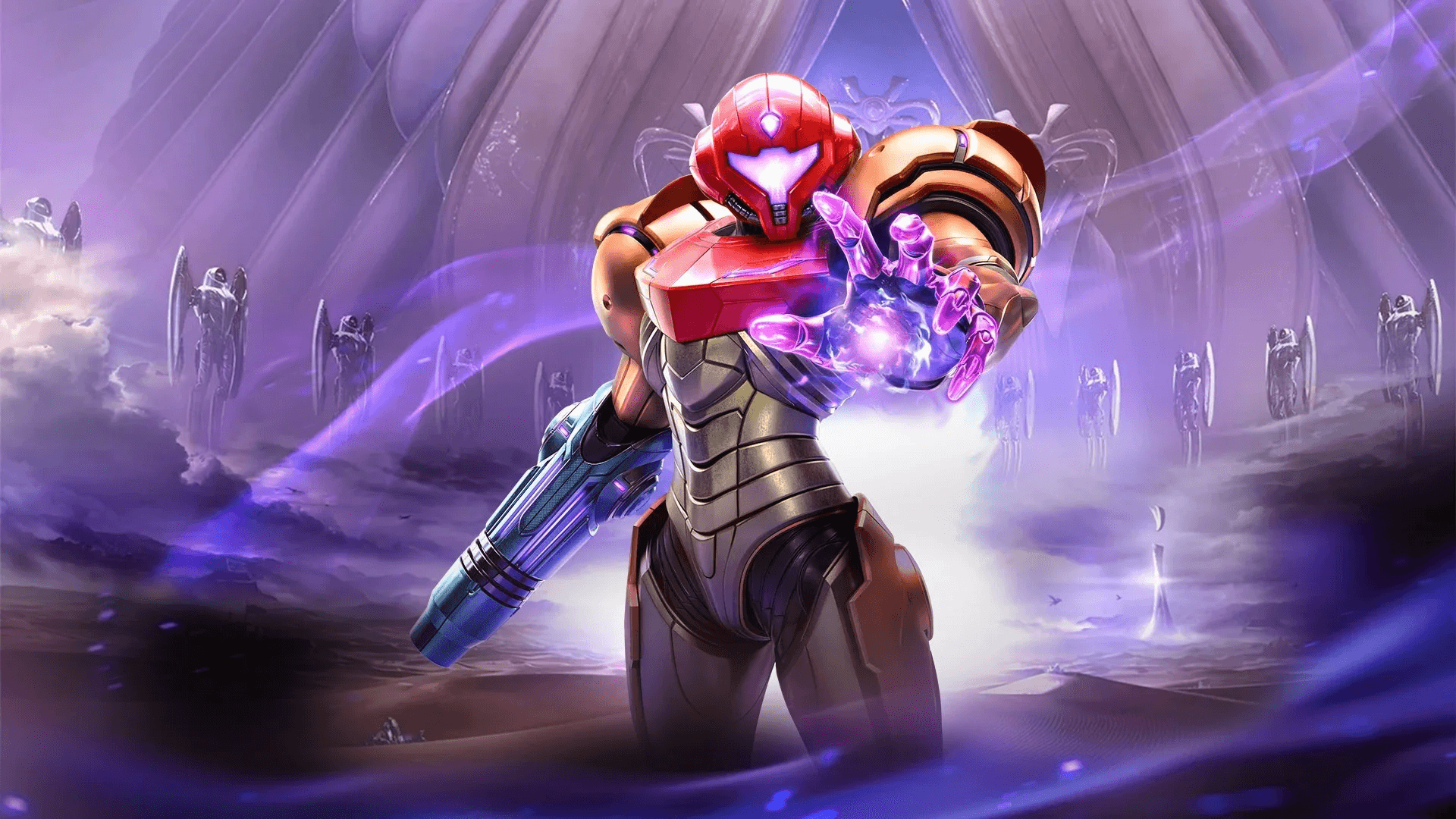 All of this is to say, Metroid matters, has always mattered and will, hopefully, always matter. The spark for this post came from the imminent release of Prime 4: Beyond on the Switch and Switch 2. I have… thoughts about what I want, expect, need out of that game. I bought a Switch 2 for two games, Donkey Kong Bananza and Prime 4. Bonanza blew me away and I’m hoping Prime 4 does the same. Not just to me but to everyone else as well. I want Metroid to be that top 3 title I imagine it to be. I want Samus to be as iconic as Mario and Link to everyone else. I need a Metroid TV show with the production value of something like Alien: Earth or Battlestar Galactica. I believe naming this game Prime 4: Beyond instead of just starting a new series called Beyond was a gigantic misstep. There is inherent baggage with that number 4. Not bad baggage but when someone is looking to try something new, starting with number 4 isn’t usually the move. I hope I’m being silly but I can’t help but wonder what could have been before the game has even shipped. It’s a weird place to be. Regardless of naming conventions, it is an important release for Nintendo this generation. I’m sure Kris and I will have a ton to say on the show so make sure you subscribe and check us out.
But I want to know what you think. Join the Stone Age Gamer discord, or you can find me on Bluesky to let me know your thoughts. In the immortal words of Billy Joel, “Life is a series of hellos and goodbyes I'm afraid it's time for goodbye again.” See you soon.